

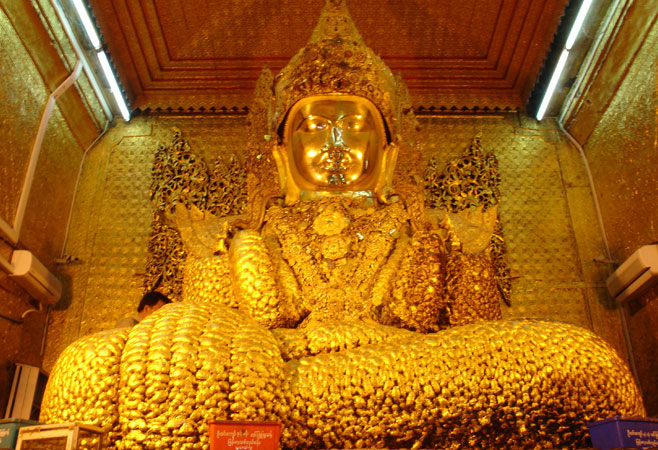
The Mahamuni Buddha image (literal meaning: The Great Sage) is defined in this temple, and originally came from Arakan. It is higly venerated in Burma and central to many people’s lives, as it is seen as an expression of representing the Buddha’s life.
According to the legend, the Buddha visited the Dhanyawadi city of Arakan in 554 BC. King Sanda Thuriya requested that an image was cast of him. After casting the Great Image, the Buddha breathed upon it, and thereafter the image became the exact likeness of the Mahamuni.
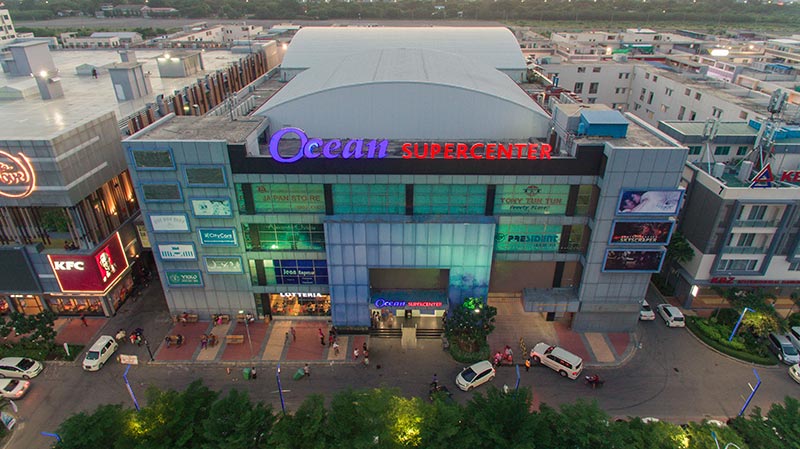
Ocean center, Mingalar Mandalay opened on 1st August 2014 and is located at 73rd Street (between Thazin Street and Ngu War Street) Chanmyathazi Township, Mandalay. Ocean Supercenter is the anchor tenant of the center. The center has a total net leasable area of 124,600 sqft with 52 shops inside the center.
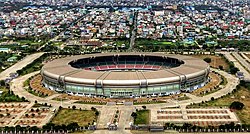
Mandalar Thiri Stadium is a multi-use stadium, located in Mandalay, Myanmar. It located east of the Mingalar Mandalay. Its address is between 68th and 73rd, between 102A rd and 107 rd, beside of the Mandalay Football Academy. The stadium hosted the women’s football tournament in the 2013 Southeast Asian Games and is also the home of Yadanarbon F.C. It has become one of the landmarks of Mandalay, Myanmar.
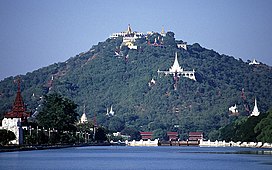
Mandalay Hill is a 240 metres (790 ft) hill located to the northeast of the city centre of Mandalay in Myanmar. The city took its name from the hill. Mandalay Hill is known for its abundance of pagodas and monasteries, and has been a major pilgrimage site for Burmese Buddhists for nearly two centuries. At the top of the hill is the Sutaungpyei (literally wish-fulfilling) Pagoda. A panoramic view of Mandalay from the top of Mandalay Hill alone makes it worthwhile to attempt a climb up its stairways.
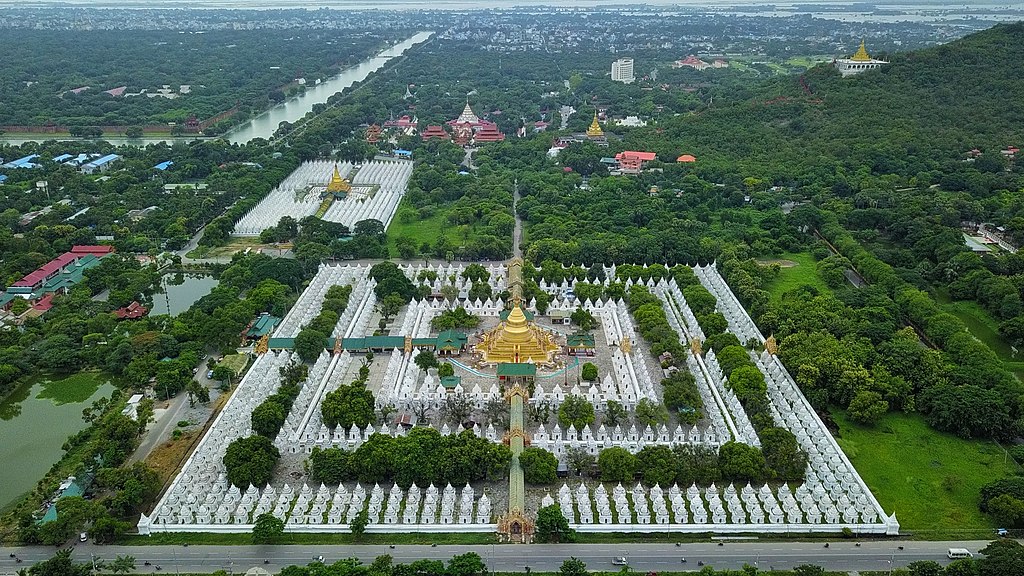
Kuthodaw Pagoda is a Buddhist stupa, located in Mandalay, Burma (Myanmar), that contains the world’s largest book. It lies at the foot of Mandalay Hill and was built during the reign of King Mindon. The stupa itself, which is gilded above its terraces, is 188 feet (57 m) high, and is modelled after the Shwezigon Pagoda at Nyaung-U near Bagan. In the grounds of the pagoda are 729 kyauksa gu or stone-inscription caves, each containing a marble slab inscribed on both sides with a page of text from the Tipitaka, the entire Pali Canon of Theravada Buddhism.
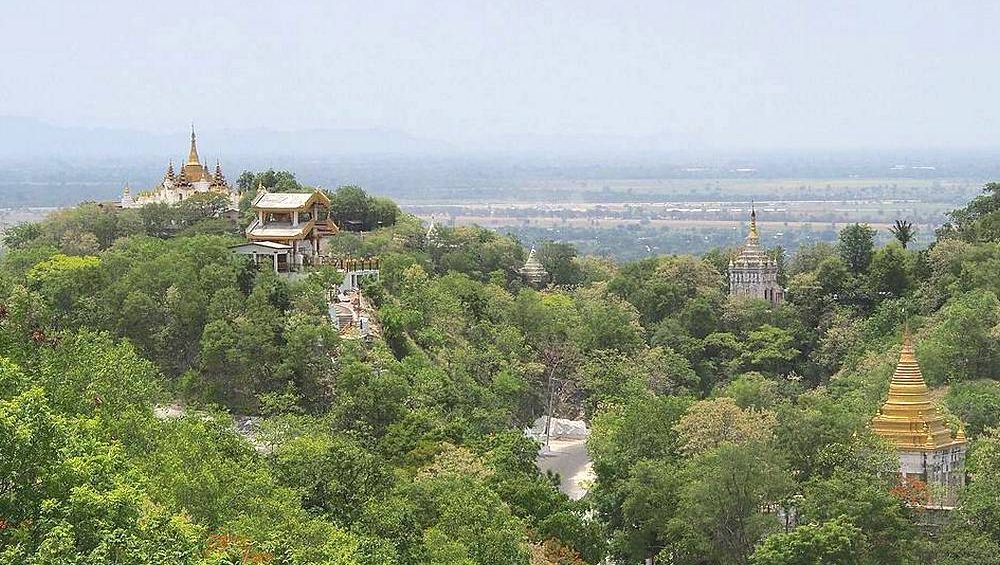
Situated in the East of Mandalay, the Yankin Hill signifies “away from danger”, and also demonstrates the harmony and tranquility of Mandalay. There are numerous engraved figures of fishes on the hill which was placed by Min Shin Saw, child of King Alaung Sithu during the Bagan Era. These figures are believed to be first put in the Royal Palace, yet as people were superstitious about them, he had to move all the figures far from the Royal Palace to the Yankin Hill in the Yadanar Bone Period.
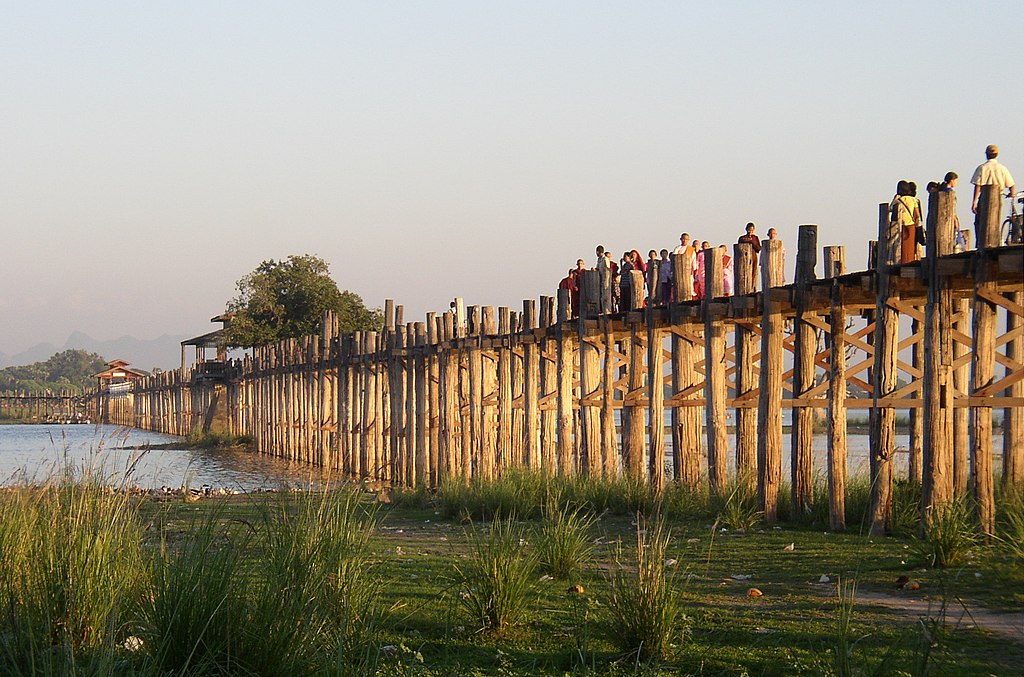
U Bein Bridge is a crossing that spans the Taungthaman Lake near Amarapura in Myanmar. The 1.2-kilometre (0.75 mi) bridge was built around 1850 and is believed to be the oldest and longest teakwood bridge in the world. Construction began when the capital of Ava Kingdom moved to Amarapura, and the bridge is named after Maung Bein who had it built. It is used as an important passageway for the local people and has also become a tourist attraction and, therefore, a significant source of income for souvenir sellers. It is particularly busy during July and August when the lake is at its highest.